日食與文化
Solar Eclipses and Culture
來源:Javier Castro
Text:
Keighley Rockcliffe
(NASA
GSFC,
UMBC CSST,
CRESST II)|發表日期:2026-09-02
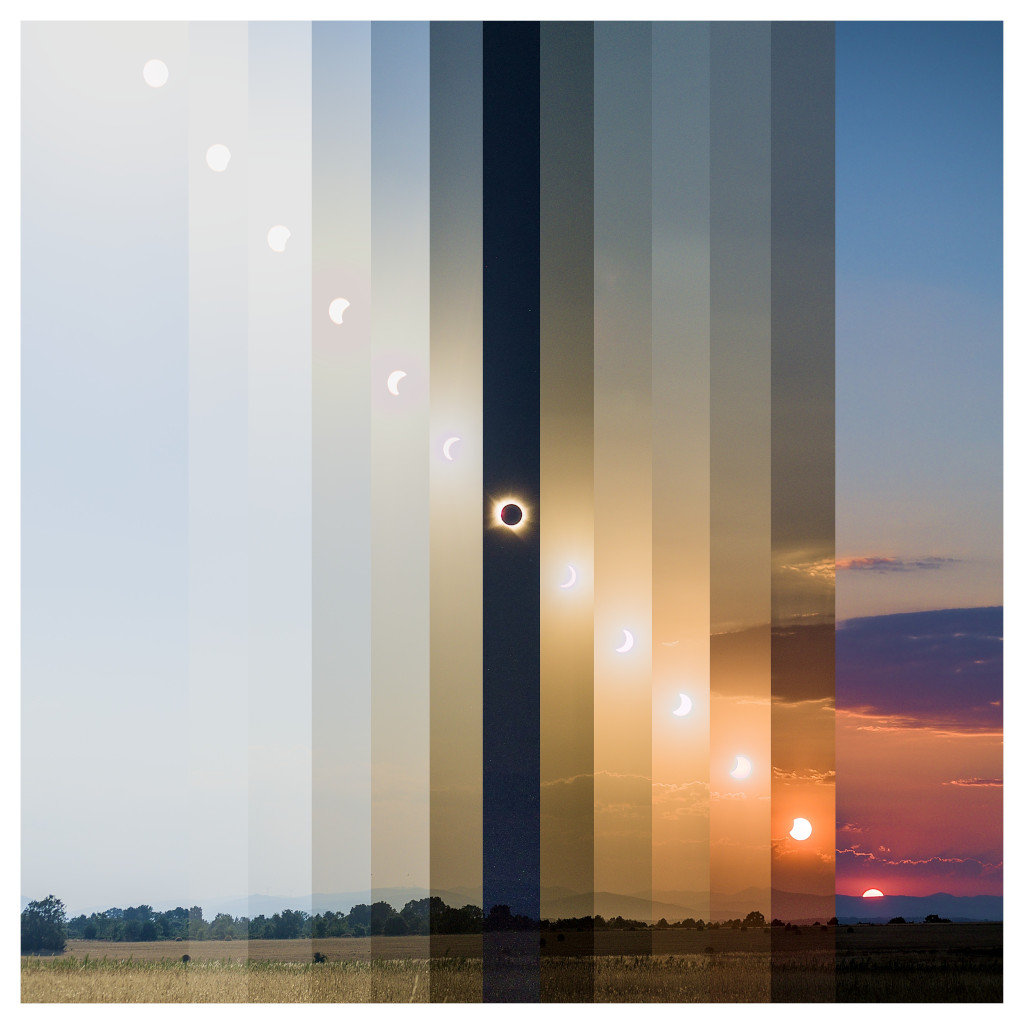
假設你從未聽說過日食。在你的一生中,太陽的行為一直都是可以預測的。某一天,你親眼目睹了天空的變幻,正如這張拼接圖所呈現的那樣——它記錄了 2026 年 8 月 12 日日食過程中長達兩小時的天空變化。 太陽消失了,只留下一個明亮而空蕩的圓環。你會認為發生了什麼?在歷史長河中,人類對日食有著無數種解讀,將關於聯結、重生或危險的信念融入了文化之中。“日食”(Eclipse)一詞源自希臘語“ékleipsis”,意為“被遺棄”。 在古希臘,日食被視為眾神的憤怒,象徵著太陽對人類的拋棄。而對迪內人而言,這種天體排列則是重生的時刻。出於敬畏併為避免陽光的危害,迪內人會一直待在室內,直到太陽與月亮分離。 貝南和多哥的巴塔馬裡巴人認為,日食期間太陽與月亮正在交戰,因此社群鼓勵人們彼此和平相處。日食正是天文學與社會之間長期聯絡的一個例證。 圖集: 2026 年 8 月 12 日日食
原文:Pretend you have never heard of a solar eclipse. The Sun’s behavior has been predictable your whole life. One day, you witness the sky transform as it does in today’s spliced image spanning two hours of the August 12, 2026 solar eclipse. The Sun disappears, leaving behind a bright, empty ring. What would you think had happened? Humans have interpreted eclipses in countless ways throughout history, embedding beliefs about connection, rebirth, or danger into culture. “Eclipse” comes from the Greek word “ékleipsis” meaning “abandonment”. In ancient Greece, the solar eclipse marked the anger of the gods and the Sun abandoning humanity. To the Diné people, this celestial alignment is a time of renewal. Out of respect and to avoid the danger of sunlight, the Diné stay inside until the Sun and Moon separate. The Batammariba people of Benin and Togo believe that the Sun and Moon fight during an eclipse, so the community encourages peace among themselves. Eclipses are an example of the longstanding connection between astronomy and society. Gallery: Solar Eclipse of 2026 August 12
※ 本文由萌芽機器人自動轉貼自每日一天文圖(Astronomy Picture of the Day,APOD),原文為英文,正體中文是透過 DeepL 翻譯及 OpenCC 進行自動處理,內容僅供參考,若有任何錯誤之處還請見諒!
關於每日一天文圖:每日一天文圖網站是美國國家航空暨太空總署與密西根理工大學提供的服務,網站每天提供一張影像或圖片,並由天文學家撰寫扼要說明其特別之處。