土星與海王星的逆行之舞
The Retrograde Dance of Saturn and Neptune
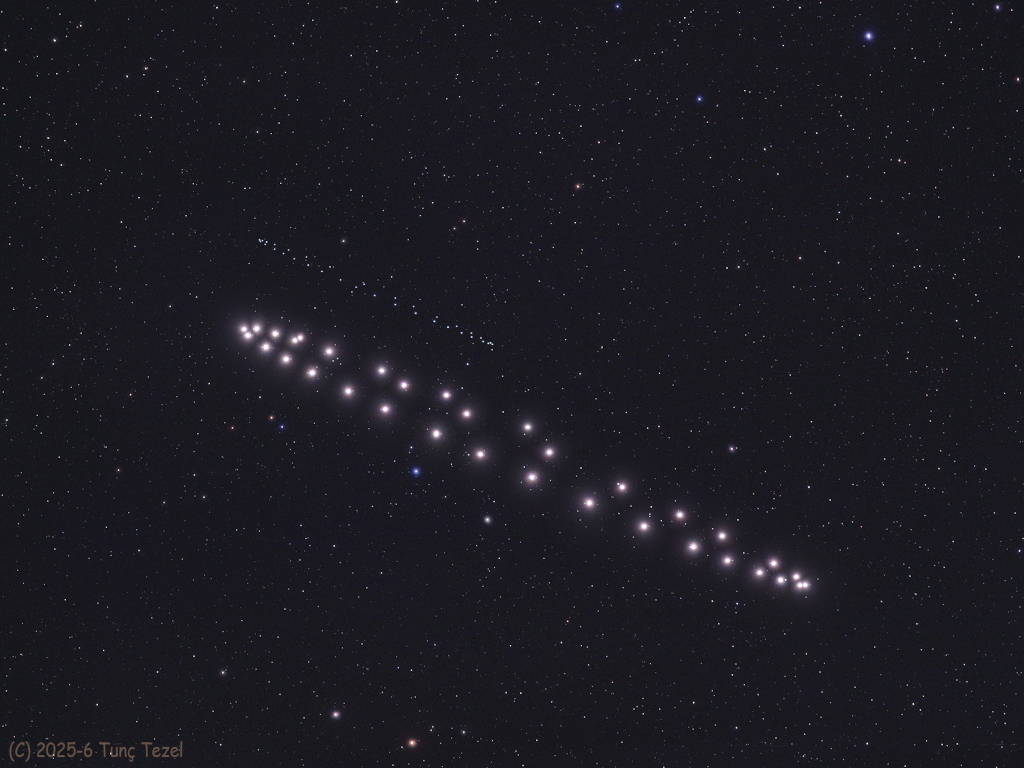
來源:Tunç Tezel (TWAN)
Text:
Keighley Rockcliffe
(NASA
GSFC,
UMBC CSST,
CRESST II)|發表日期:2026-05-06
土星和海王星逆行意味著什麼?圖中展示的是 2025 年 5 月至 2026 年 2 月期間,歷時 34 個夜晚拍攝的合成影像,記錄了土星(較亮,前景)和海王星(較暗,背景)的執行軌跡。在此期間,這兩顆行星呈現出逆行運動,這意味著它們在天空中看起來像是向後移動。 這種視逆行現象發生在地球繞太陽公轉時超越執行較慢的外行星之際。試想太陽系是一條跑道。與外行星相比,地球在跑道內側“奔跑”得更快。當地球接近、與外行星對齊並“超越”它們時,從地球的視角看,外行星的位置便會從前方變為後方。正是這種視角的轉變,導致外行星在夜空中的位置發生變化。 與今日圖片對應的動畫展示了土星和海王星在北半球夜空中持續數月的“舞蹈”。土星從雙魚座移入水瓶座又折返,而海王星則一直停留在雙魚座。這是自 1989 年上次合相以來,土星和海王星在天空中距離最近的一次。
原文:What does it mean for Saturn and Neptune to be in retrograde? Featured is a composite of images taken over 34 nights from May 2025 to February 2026 tracing Saturn (brighter, foreground) and Neptune (dimmer, background). Over that time, the two planets exhibited retrograde motion, meaning they appeared to move backward in the sky. This apparent backwards motion occurs when Earth overtakes the slower outer planets as they orbit the Sun. Imagine the Solar System is a running track. Earth "runs" faster along the inside of the track compared to the outer planets. As Earth approaches, aligns, and then "laps" the outer planets, they change position from ahead to behind from the Earth's perspective. This perspective shift is what causes the outer planets to change position in the night sky. An animation corresponding to today’s image shows Saturn and Neptune’s months-long dance across the northern night sky. Saturn stepped from the Pisces constellation into Aquarius and back again while Neptune remained in Pisces. This is the closest Saturn and Neptune have been in the sky since their last conjunction in 1989.
※ 本文由萌芽機器人自動轉貼自每日一天文圖(Astronomy Picture of the Day,APOD),原文為英文,正體中文是透過 DeepL 翻譯及 OpenCC 進行自動處理,內容僅供參考,若有任何錯誤之處還請見諒!
關於每日一天文圖:每日一天文圖網站是美國國家航空暨太空總署與密西根理工大學提供的服務,網站每天提供一張影像或圖片,並由天文學家撰寫扼要說明其特別之處。