彗星R 3 PanSTARRS 懸浮於喜馬拉雅山谷上空
Comet R3 PanSTARRS over a Himalayan Valley
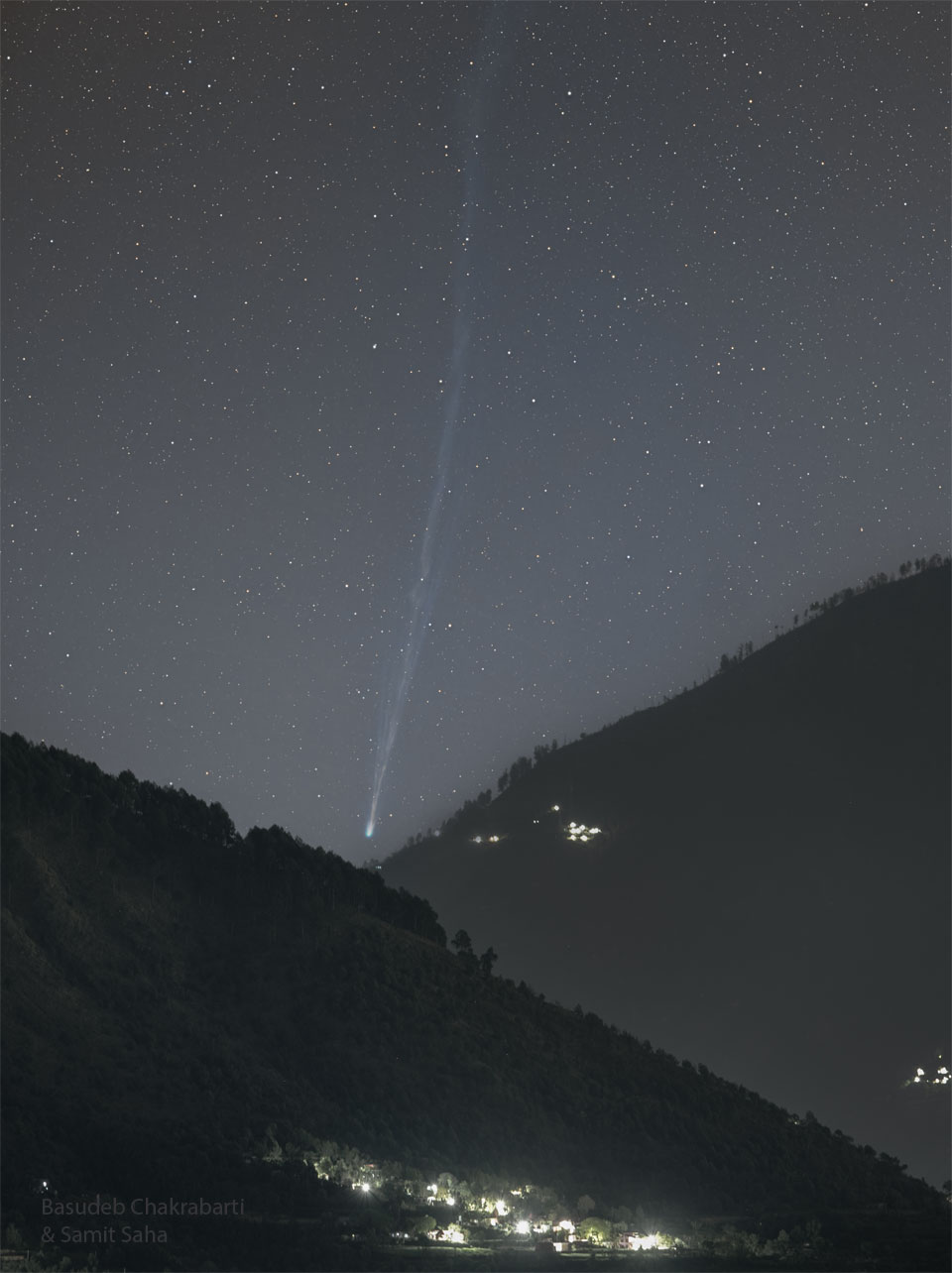
來源:Basudeb Chakrabarti &
Samit Saha|發表日期:2026-04-20
要觀察R 3 PanSTARRS 彗星的長尾,最好的方法是使用相機。本週,這顆近期變亮的彗星在黎明前出現在北半球天空的東方,但肉眼僅能勉強看到。 透過長時間曝光拍攝到的數度長的離子尾對彗星而言並不罕見——這主要是因為地球幾乎是從側面觀察彗尾,而彗尾正指向遠離太陽的方向。在上週拍攝的這張特色圖片中,C/ 2025 R 3 (PanSTARRS)彗星在印度喜馬拉雅山脈兩座山峰之間的山谷中,展現了它飄逸的彗尾。 該彗星已於昨日經過近日點。隨著下週它逐漸接近地球近日點,其蓬鬆的塵尾可能會變得可見。這顆彗星正緩慢地從北半球夜空移出,到本月底,當它逐漸變暗並離開太陽系時,日落後將在南半球夜空中可見。 不斷擴充的相簿: 2026 年的R 3 PanSTARRS 彗星
原文:The best way to see comet R3 PanSTARRS’s long tail is with a camera. This week, the recently brightened comet appears in northern skies to the east just before dawn, but is only barely visible to the unaided eye. The many-degree ion tail captured on long duration camera exposures is not unusual for a comet - it is primarily due to the Earth's nearly sideways view of the tail as it points away from the Sun. In the featured image taken last week, Comet C/2025 R3 (PanSTARRS) showed off its flowing tail through a valley between two peaks in the Himalayan mountains of India. The comet passed its closest to the Sun yesterday. As it nears its closest approach to Earth next week, a bushy dust tail may become visible. The comet is slowly moving out of northern skies and by the end of the month will be visible after sunset in southern skies as it fades and leaves our Solar System. Growing Gallery: Comet R3 PanSTARRS in 2026
※ 本文由萌芽機器人自動轉貼自每日一天文圖(Astronomy Picture of the Day,APOD),原文為英文,正體中文是透過 DeepL 翻譯及 OpenCC 進行自動處理,內容僅供參考,若有任何錯誤之處還請見諒!
關於每日一天文圖:每日一天文圖網站是美國國家航空暨太空總署與密西根理工大學提供的服務,網站每天提供一張影像或圖片,並由天文學家撰寫扼要說明其特別之處。