天王星最大的衛星:提坦尼亞
Uranus's Largest Moon: Titania
發表日期:2026-03-31
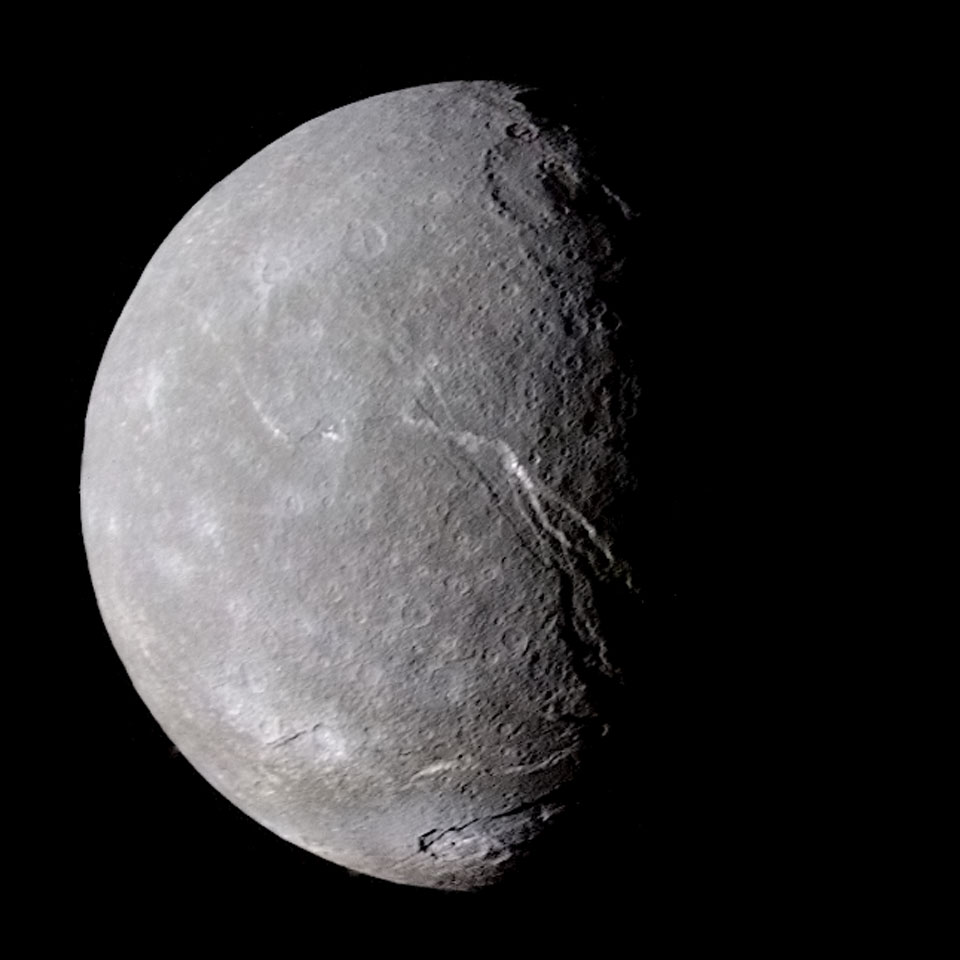
提坦尼亞崎嶇的地貌由峽谷、懸崖和隕石坑交織而成。 1986 年,美國宇航局(NASA)的行星際探測器“航海家 2 號”飛越了天王星最大的衛星,並拍攝了這張標誌性照片。提坦尼亞上的溝壑與天王星另一顆衛星阿里爾上的溝壑極為相似,這表明提坦尼亞在遙遠的過去曾經歷過某種劇烈的地表事件,可能與水的凍結和膨脹有關。 儘管泰坦是天王星最大的衛星,但其半徑僅為海王星最大衛星特里同的一半左右——而海王星本身比地球的月球稍小。 提坦於 1787 年由威廉·赫歇爾發現,本質上是一個巨大的“髒冰球”,其組成約一半是水冰,一半是岩石。最近有推測認為,放射性加熱可能將部分地下冰融化形成了海洋。
原文:Titania's tortured terrain is a mix of canyons, cliffs, and craters. NASA's interplanetary robot spacecraft Voyager 2 passed the largest moon of Uranus in 1986 and took the feature picture. That the trenches of Titania resemble those on another moon of Uranus, Ariel, indicate that Titania underwent some violent surface event possibly related to water freezing and expanding in its distant past. Although Titania is Uranus's largest moon, it is only about half the radius of Triton - the largest moon of Uranus's sister planet Neptune, which itself is slightly smaller than Earth's Moon. Titania, discovered by William Herschel in 1787, is essentially a large dirty iceball that is composed of about half water-ice and half rock. There is recent speculation that radioactive heating melts some underground ice into oceans.
※ 本文由萌芽機器人自動轉貼自每日一天文圖(Astronomy Picture of the Day,APOD),原文為英文,正體中文是透過 DeepL 翻譯及 OpenCC 進行自動處理,內容僅供參考,若有任何錯誤之處還請見諒!
關於每日一天文圖:每日一天文圖網站是美國國家航空暨太空總署與密西根理工大學提供的服務,網站每天提供一張影像或圖片,並由天文學家撰寫扼要說明其特別之處。