發射“羽流”:SpaceX 水母號
Launch Plume: SpaceX Jellyfish
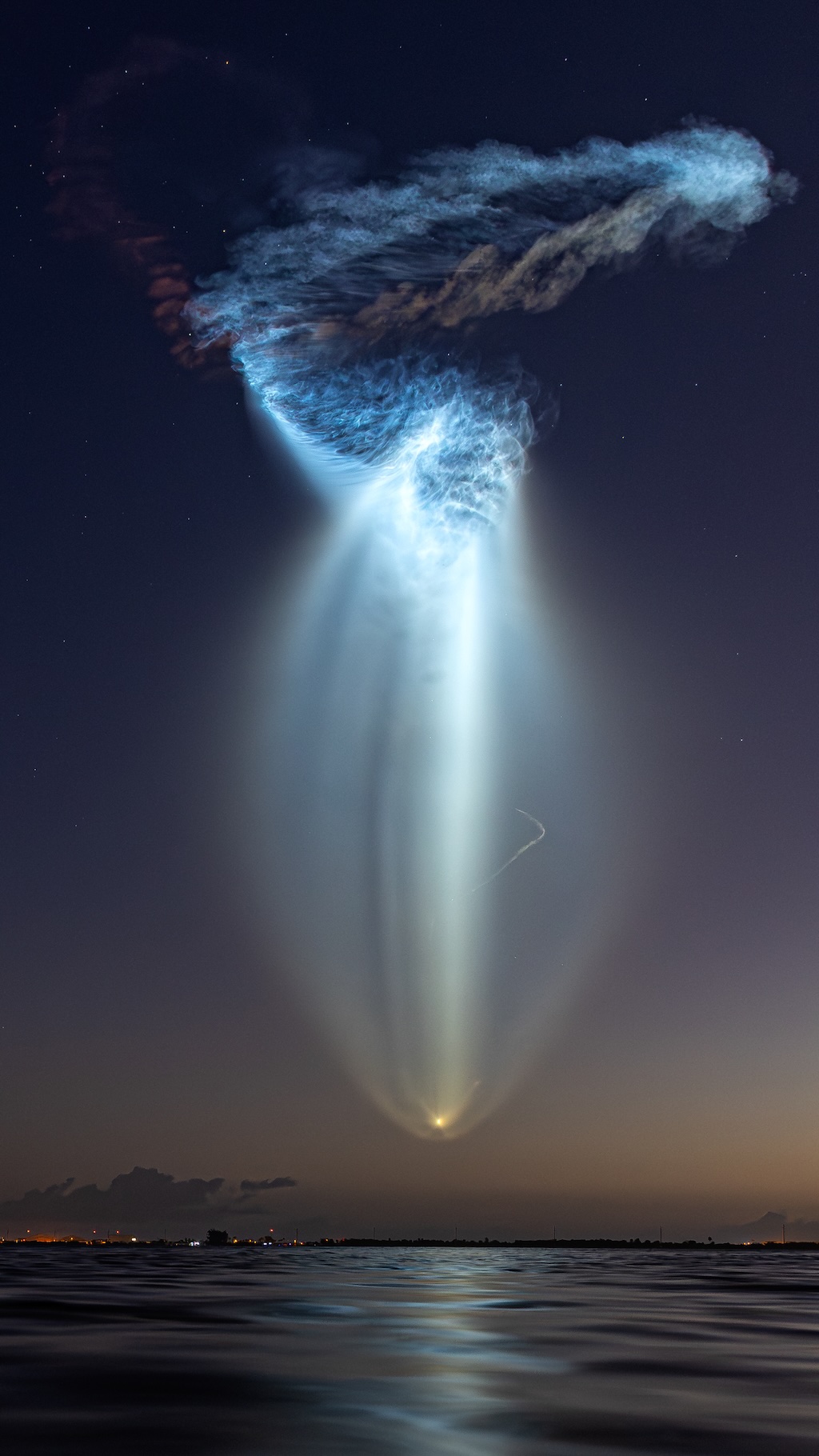
來源:Michael Seeley|發表日期:2026-03-19
即使你總是心不在焉,也很難見到像這樣“水母”般的景象。配圖展示了 3 月 4 日SpaceX“獵鷹 9 號”火箭在佛羅里達州卡納維拉爾角的發射場景。發射發生在日出前 52 分鐘,當時第二級火箭的尾焰已升至高空,映照著初升的朝陽,而攝影師所處的位置仍處於黑暗之中。 這種光影交織的效果通常只在黎明或黃昏時分出現,使得主要由水蒸氣和二氧化碳組成的尾焰看起來像一團發光的雲。它之所以看起來像是在下降,是因為火箭在飛向太空的過程中順應了地球的曲率。 與此相關的還有“暮光現象”,它會產生色彩斑斕的飛機尾跡,有時會被誤認為是UFO。不過,如果你對此感到好奇:美國宇航局(NASA)確實曾在 20 世紀 90 年代將真實的水母送入太空,作為一項科學實驗的一部分。
原文:ven if you live with your head in the clouds, you won’t find a jellyfish like this one very often. The featured image shows a SpaceX Falcon 9 rocket launch from Cape Canaveral in Florida on March 4. The launch happened 52 minutes before sunrise, and the second stage rocket exhaust plume was high enough in the sky to catch the light of the rising sun, while the photographer was still in the dark. This combination of light and shadow, possible at dawn or dusk, makes the exhaust, mostly water vapor and carbon dioxide, appear as a glowing cloud. It only looks like it's going down, as the rocket follows the curvature of the Earth on its way to space. A related effect is the twilight phenomenon, which causes colorful contrails sometimes mistaken for UFOs. But, in case you are wondering: real jellyfish were sent to space by NASA in the 1990s as part of a science experiment.
※ 本文由萌芽機器人自動轉貼自每日一天文圖(Astronomy Picture of the Day,APOD),原文為英文,正體中文是透過 DeepL 翻譯及 OpenCC 進行自動處理,內容僅供參考,若有任何錯誤之處還請見諒!
關於每日一天文圖:每日一天文圖網站是美國國家航空暨太空總署與密西根理工大學提供的服務,網站每天提供一張影像或圖片,並由天文學家撰寫扼要說明其特別之處。