新月恩克拉多斯
Crescent Enceladus
發表日期:2026-02-07
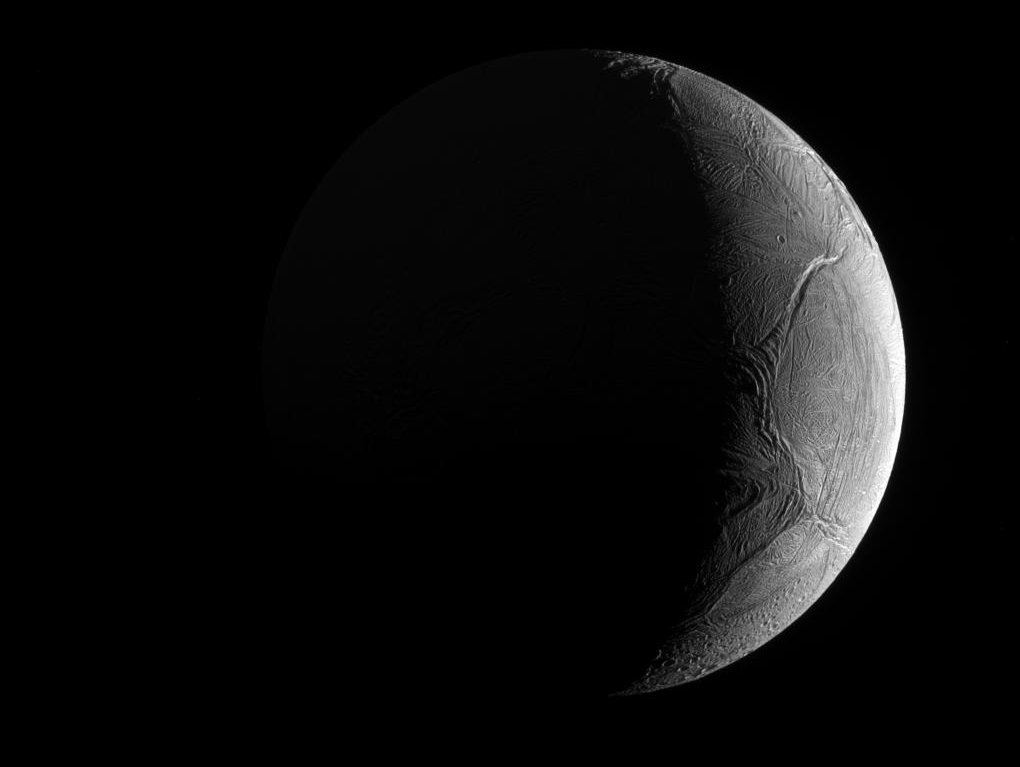
在這張卡西尼號探測器拍攝的影像中,神秘的土衛二朝向土星的一側若隱若現。 2016 年 11 月,當卡西尼號相機以近乎朝向太陽的方向拍攝這張壯觀畫面時,其鏡頭距離這顆明亮新月狀衛星約 13 萬公里,畫面中北極位於上方。 這顆遙遠的天體反射了超過 90 %的入射陽光,其表面反射率堪比新雪。直徑僅 500 公里的恩克拉多斯竟是顆異常活躍的衛星——卡西尼飛越期間採集的資料與影像揭示:南極間歇泉噴湧著水蒸氣與冰晶,冰殼之下更隱藏著液態水海洋的證據。
原文:Peering from the shadows, the Saturn-facing hemisphere of tantalizing inner moon Enceladus poses in this Cassini spacecraft image. North is up in the dramatic scene captured during November 2016 as Cassini's camera was pointed in a nearly sunward direction about 130,000 kilometers from the moon's bright crescent. In fact, the distant world reflects over 90 percent of the sunlight it receives, giving its surface about the same reflectivity as fresh snow. A mere 500 kilometers in diameter, Enceladus is a surprisingly active moon. Data and images collected during Cassini's flybys have revealed water vapor and ice grains spewing from south polar geysers and evidence of an ocean of liquid water hidden beneath the moon's icy crust.
※ 本文由萌芽機器人自動轉貼自每日一天文圖(Astronomy Picture of the Day,APOD),原文為英文,正體中文是透過 DeepL 翻譯及 OpenCC 進行自動處理,內容僅供參考,若有任何錯誤之處還請見諒!
關於每日一天文圖:每日一天文圖網站是美國國家航空暨太空總署與密西根理工大學提供的服務,網站每天提供一張影像或圖片,並由天文學家撰寫扼要說明其特別之處。